
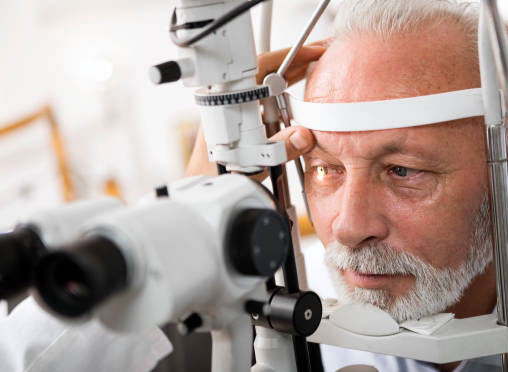
Harsha sai eye Hospital is the 1st center in the state to offer Glaucome super speciality services with state of the art technologies and equipments.
Glaucoma is disease of the eye usually occurs due to elevated intraocular pressure in the eye, this high pressure causes damage to the optic nerve which is the main nerve that transfers information from eye to brain, this can eventually lead to partial loss of vision or even may result in blindness. If the glaucoma is found at its early stages it can be prevented to make any progress, but the damage already and the lost vision that has already happened cannot be reversed or corrected.
As glaucoma is result of higher intraocular pressure, it can be treated by lowering the pressure of the eye. There are many ways to treat glaucoma which can be either of these
Glaucoma treatment is treated most of the times starting with an eyedrop. The eyedrop can help decrease the pressure in the eye and by improving the drainage of the eye or can decrease the amount of fluid the eye makes, there by decreasing the pressure.
The treatment of acute angle-closure glaucoma is more sudden and can be a medical emergency ophthalmological treatment as the symptoms are acute and sudden. The treatment can be above which can be both medication and laser or other surgical procedures.
You may have a procedure called a laser peripheral iridotomy in which the doctor creates a small opening in your iris using a laser. This allows fluid (aqueous humor) to flow through it, relieving eye pressure.
The eyedrops intend to bring the eye pressure down, but if this does not happen so the doctor may prescribe some oral medicatins which is usually carbonic anhydrase inhibitor.
Surgical procedure and laser treatment are further options that are used to treat the glaucoma:
Laser treatment
Laser trabeculoplasty is the procedure where the laser is used to open the blocked fluid draining channels of the eye.
Filtering eye fluid
Next option is trabeculectomy, here the surgeon removes the trabecular meshwork by opening the sclera which is a white part of the inner eye
Placement of drainage tubes
In this procedure small tube is inserted into the eye to drain out any excess fluid in the eye to lower eye pressure.
Minimally invasive glaucoma surgery (MIGS)
This is relatively simple procedure compared to above and requires less postoperative care, this is often combined with cataract surgery. This surgery aims to achieve results as in the above procedures to lower the pressure of the eye.
Iridotomy
Here the surgeon creates an opening in the iris and intends to drain the eye fluid out and thereby reducing the eye pressure.
The damage to the optic nerve of the eye occurs due to high intraocular pressure, this pressure develops when there is too much of the fluid and there is no outflow of the fluid through any of the channels from the eye as these outflow channel may have been blocked.
Glaucoma at its early stages produces no symptoms and this can be detected only at the time of eye examination. This can develop for many years and sometimes there is not any noticeable sight loss. In early stages, few people notice the side or peripheral vision loss but they continue to ignore as there is no loss to the visual acuity or sharpness of the vision is maintained until the disease progresses to its later stages.
Open-angle glaucoma
This glaucoma produces no symptoms at its initial stages and can extend to many years with little peripheral vision loss, so this can only be detected with an eye examination from an ophthalmologist, if this is detected at its early stage, it can be treated to protect the vision. This is more common form of glaucoma.
Acute angle closure glaucoma
On the other hand acute angle-closure glaucoma produces symptoms that are noticeable and are at times sudden or acute and the damage occurs very suddenly. If any of the symptoms of eye are noticeable the patient should seek medical attention immediately with an ophthalmologist.
Please fill in the form below and we will soon call you back.